
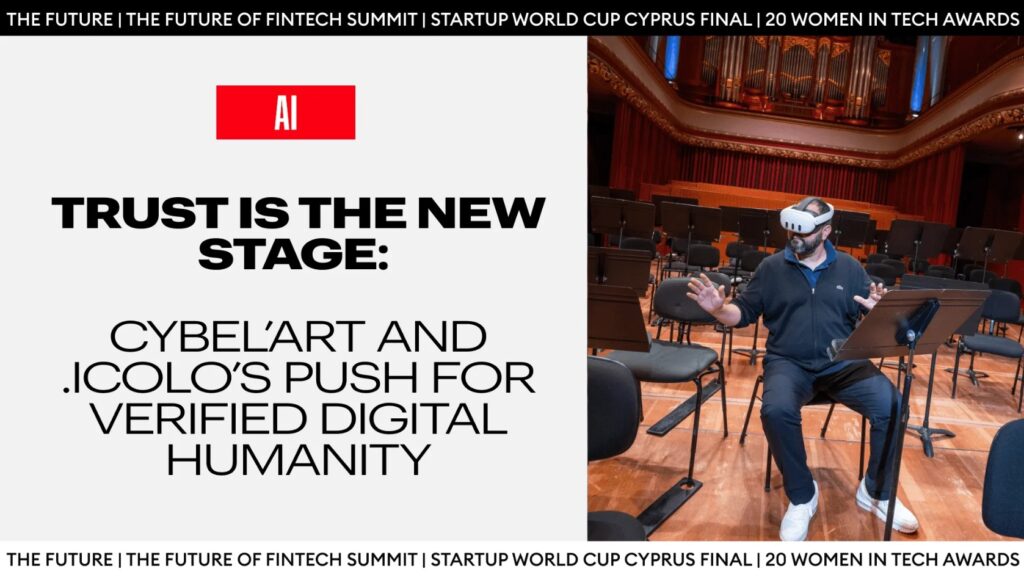
Trust Is The New Stage: Cybel’Art And .icolo’s Push For Verified Digital Humanity
The global cultural and creative industries now employ more people than the combined car industries of Europe, Japan, and the United States. A report by UNESCO produced with CISAC and EY estimates that CCIs generate US$2.25 trillion a year, around 3% of world GDP, and support 29.5 million jobs worldwide.
The wider entertainment and media economy is also growing. PwC forecasts global revenues reaching US$3.5 trillion by 2029, with live and offline formats still accounting for 61% of consumer spending. The future of culture is expanding in digital directions, but the spending data suggests the pull of shared, physical experiences remains strong. That creates room for “phygital” performance. These formats blend the physical intimacy of live culture with digital experiences that expand access, perspective, and reach without replacing the real stage.
But with the advent of new technologies, however, those behind the artistic works —writers, musicians, filmmakers, designers —are being left behind. Their work is being mimicked, monetised, and exploited, without consent, compensation, or any form of credit. For the most part, cultural policy, especially in Europe, where it is known to be more stringent, is trying to keep up.
The EU AI Act has set a regulatory baseline for synthetic media, and is rolling out transparency obligations that recentre trust and disclosure from “nice-to-have” into compliance territory. That includes requirements that AI-generated outputs be marked in a machine-readable way and that deepfakes be disclosed as such, with limited exceptions.
Copyright policy is adjusting, too. The EU’s Digital Single Market directive recognises the importance of preserving culture in the digital age. It builds a mandatory exception that allows cultural heritage institutions to reproduce works in their permanent collections for preservation, in any format or medium, to the extent necessary.
But is this enough to ensure a fair future for the creative economy, one that honours artistic exploration, protects authorship, and ensures AI tools lift up, and not take away from, the people who have inspired them? Or do we need actors to step up and not leave the future of artists in the hands of regulators and, let’s be honest, hope?
This is where Cybel’Art comes in. Founded by Pierluigi Christophe Orunesu, the company aims to capture living artists at high fidelity and extend performance into new environments without collapsing their identity into an anonymous avatar or an ungoverned deepfake. It’s a vision of immersive culture that treats presence as something to protect, not just distribute.
[…] In this interview with The Future Media, Pierluigi Christophe Orunesu shares how he is building Cybel’Art and .icolo to protect artistic legacy, strengthen trust in immersive culture, and shape a new economic model for high-fidelity performance in the AI age.
Read the all article here:
Passage du Loup • Grand’Rue 29
1110 Morges (VD)
SWITZERLAND